
The Critical Role of OEM Stability Testing in Bangladesh’s Personal Care Sector
Building high-performing, market-ready cosmetic products requires far more than basic blending of active ingredients. For skincare manufacturers in Bangladesh, ensuring that an emulsion retains its viscosity, aesthetic elegance, preservative integrity, and biological efficiency over a 24-to-36-month shelf life demands advanced stability testing infrastructure. Formulations engineered for Western temperate climates (Zone I & II) frequently fail when introduced to South Asian environmental stresses without custom reformulation and rigorous climate chamber validation.
As an international contract manufacturing powerhouse with Italian heritage—operating under ISO 22716 (GMP), ISO 9001, ISO 14001, ISO 45001, IFS HPC, and Halal certifications—we deliver turnkey R&D and specialized OEM stability testing equipment tailored specifically for factories, laboratory facilities, and brand owners in Bangladesh.
1. Scientific Framework: Testing under ICH Zone IVb (Hot & Humid Conditions)
The International Council for Harmonisation (ICH) Q1A(R2) standards outline specific environmental stress parameters for pharmaceutical and cosmeceutical products based on geographic climate classifications. Bangladesh falls into Zone IVb, the most challenging environmental category for liquid, cream, and gel formulations.
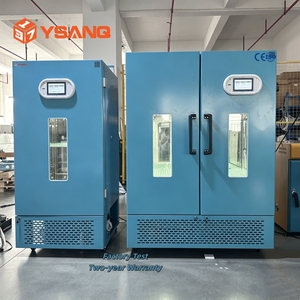
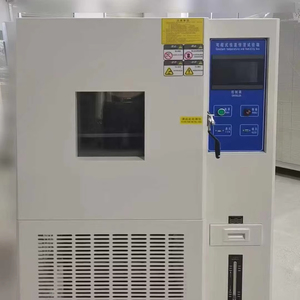
- Accelerated Stability Testing: Formulations are subjected to 40°C ± 2°C and 75% RH ± 5% RH over 6 months inside specialized 304 stainless steel PID constant climate chambers. This simulates 24 months of real-world shelf aging under tropical stress.
- Real-Time Long-Term Testing: Stored at 30°C ± 2°C and 75% RH ± 5% RH for the duration of the targeted shelf-life to confirm physical, chemical, and microbiological integrity under actual Bangladeshi distribution conditions.
- Intermediate Testing Protocols: Conducted at 30°C ± 2°C / 65% RH ± 5% RH when significant changes occur during accelerated stress testing.
| Stability Test Profile | Target Temperature (°C) | Relative Humidity (% RH) | Duration Range | Evaluated Failure Modes in Bangladesh Market |
|---|---|---|---|---|
| Accelerated Zone IVb | 40°C ± 2°C | 75% RH ± 5% RH | 1 to 6 Months | Oil/Water Phase Separation, Viscosity Drop, Active Oxidation |
| Real-Time Tropical | 30°C ± 2°C | 75% RH ± 5% RH | 12 to 36 Months | Color Fading, Sedimentation, Rancidity of Natural Oils |
| ICH Q1B Photostability | 20°C to 25°C | Ambient / Controlled | 1.2M Lux Hours | UV Breakdown of Niacinamide, Retinol & Sunscreen Filters |
| Thermal Freeze-Thaw | -10°C to +45°C | Dynamic Cycling | 5 Complete Cycles | Emulsion Syneresis, Crystallization, Package Creep |
2. Essential Physical & Chemical Stability Parameters for Bangladesh Factories
During the custom OEM testing cycle, skincare factories must analyze multiple physical, chemical, and biological markers to ensure compliance with the Bangladesh Standards and Testing Institution (BSTI) and global quality norms:
A. Emulsion Rheology & Phase Stability
High humidity and elevated heat weaken surfactant-oil interfaces in creams and lotions. OEM testing utilizes high-speed centrifugation (3,000 to 5,000 RPM for 30 minutes) alongside thermal stress ovens to ensure that oil-in-water (O/W) or water-in-oil (W/O) emulsions do not experience syneresis, creaming, or complete phase inversion when stored in non-air-conditioned warehouses across Chittagong or Gazipur.
B. Photostability & UV Exposure (ICH Q1B)
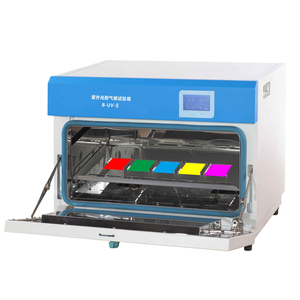
Bangladesh experiences intense solar radiation year-round. Active cosmeceutical ingredients—such as Vitamin C (L-Ascorbic Acid), Alpha Arbutin, Retinoids, Kojic Acid, and avobenzone-based sunscreens—are highly susceptible to photochemical degradation. Utilizing Lab UV Aging Environmental Climate Chambers guarantees that formulations retain potency and do not discolour into dark yellow or brown hues when stored in transparent packaging on retail shelves.
C. Preservative Efficacy & Micro-Organism Challenge Testing (PET)
Tropical moisture provides an ideal breeding ground for microbial growth, including Pseudomonas aeruginosa, Staphylococcus aureus, Candida albicans, and Aspergillus brasiliensis. Stability testing incorporates Microbial Challenge Protocols (USP <51> / ISO 11930) to verify that preservative systems remain lethal to pathogens throughout the product's life cycle, even when consumers open jars repeatedly in humid home environments.
Custom OEM Formulation R&D
Developing non-greasy, fast-absorbing, and matte-finish skincare specifically engineered for Bangladeshi skin types under high sweat and sebum conditions.
Halal & GMP Certification Support
Ensuring all raw materials, equipment contact surfaces, and processing aids adhere to international ISO 22716 GMP standards and strict Halal compliance guidelines.
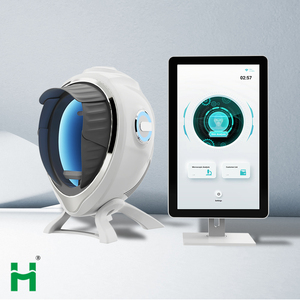
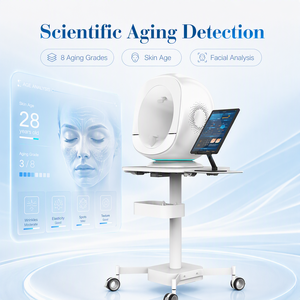
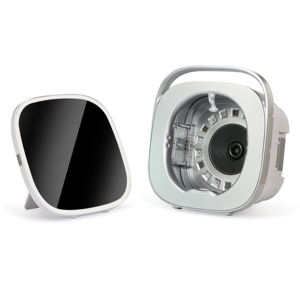
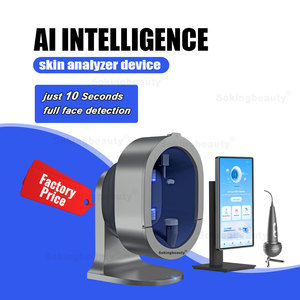
3D AI Skin Scanner Diagnostics
Integrating clinical-grade AI facial scanners into Bangladeshi dermatology clinics and flagship retail stores for real-time hydration, melanin, and acne efficacy tracking.
Localized Skincare Product Application Scenarios in Bangladesh
To successfully capture market share in Bangladesh, manufacturers must align their OEM stability testing protocols with specific localized product categories that dominate consumer purchasing intent:
1. Brightening & Anti-Hyperpigmentation Creams
Sun exposure and post-inflammatory hyperpigmentation (PIH) drive high demand for skin-brightening solutions in South Asia. Ingredients like Niacinamide, Alpha Arbutin, and Glutathione must undergo thermal accelerated testing at 40°C to guarantee that light discoloration does not occur over time, preserving consumer confidence.
2. Oil-Control & Anti-Acne Hydro-Gels
During monsoon months, high atmospheric humidity increases sebum output, causing frequent acne flare-ups. Formulations utilizing Salicylic Acid, Tea Tree Extract, and Zinc PCA require specialized viscosity stability testing in PID stainless steel test chambers to prevent liquid syneresis or polymer breakdown in gel matrices.
3. High-SPF Sunscreens & Daily Environmental Shields
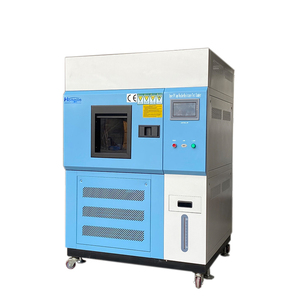
With UV indices routinely reaching extreme levels in Dhaka, sunscreens are essential. Stability testing must evaluate organic and inorganic (Zinc Oxide/Titanium Dioxide) filter dispersion to prevent clumping, phase separation, or reduction in labeled broad-spectrum protection under photostability UV chambers.
4. Botanical & Herbal Actives (Neem, Turmeric, Cica)
Bangladeshi consumers strongly favor natural and botanical heritage ingredients. However, natural extracts introduce botanical flavonoids that can oxidize quickly. Our OEM climate testing chambers measure dissolved oxygen, oxidation rates, and color index changes to stabilize natural extracts long-term.