
1. The Strategic Role of Advanced Cosmetic Filling and Assembly in Modern Beauty Brands
In the global cosmetics industry, formulation chemistry represents only half of the commercial equation. The remaining half—and often the primary bottleneck to scaling market share—lies in Cosmetic Filling and Assembly. As global consumer demand pivots toward complex clean beauty formulations, active-infused cosmeceuticals, and sustainable refillable packaging architectures, the mechanical interface between bulk cosmetics and primary container hardware has become a high-stakes engineering discipline.
For global procurement officers and beauty creators, selecting a contract manufacturing partner for filling and assembly is no longer just about purchasing machine hours. It is an operational decision that directly governs product efficacy, shelf-life integrity, regulatory compliance across US FDA / EU standards, and brand reputation. Micro-dosing variance in mascara tubes, oxygen ingress in airless skincare pumps, or thermal degradation during hot-pour lipstick filling can lead to costly batch recalls and degraded consumer trust.
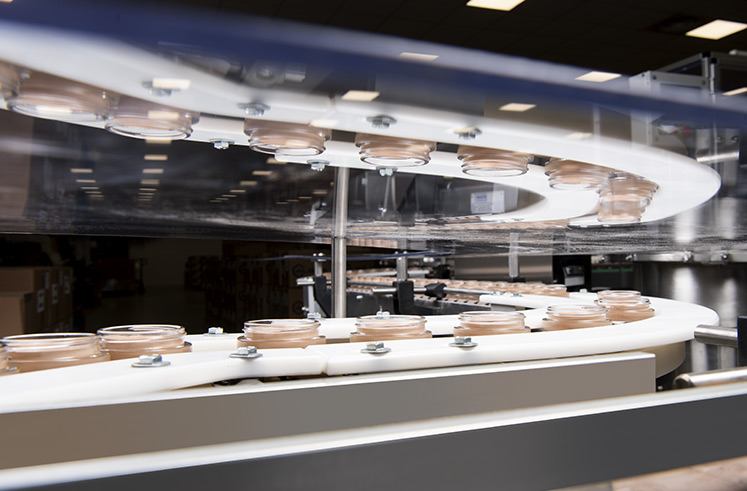
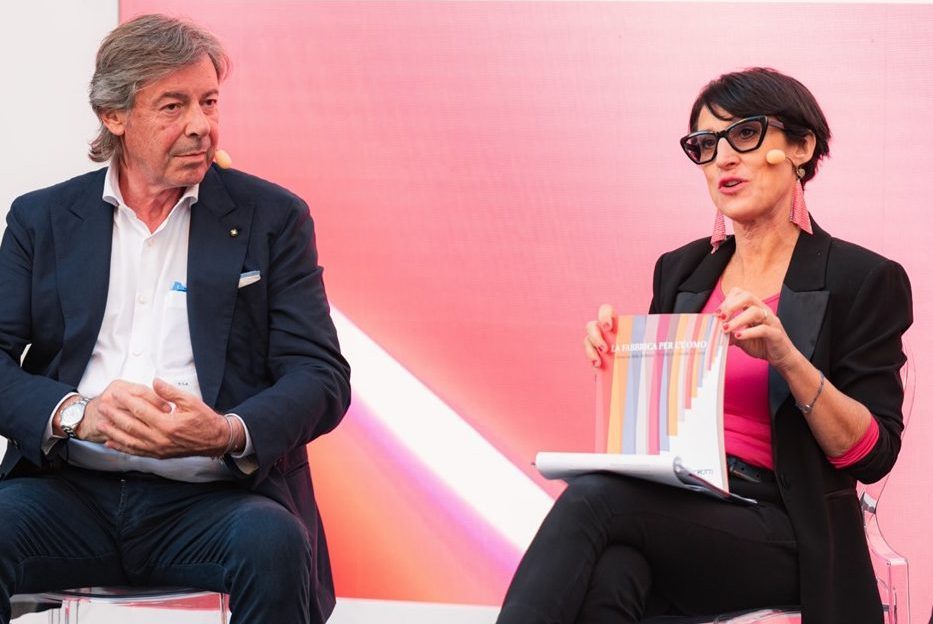
At Ancorotti Cosmetics S.p.A., located in Crema, Italy—the worldwide capital of color cosmetics manufacturing—we manage full-spectrum contract production for over 400 prestigious beauty brands spanning 50 countries. Employing over 500 dedicated specialists within our historic, zero-land-consumption facility (La Fabbrica per l'Uomo), we integrate custom formulation R&D with state-of-the-art automated filling and secondary packaging assembly lines.
2. Core Product Portfolio & Specialized Filling Technologies
Cosmetic bulk formulations exhibit vastly diverse rheological properties—ranging from low-viscosity aqueous serums to shear-thinning mascaras and high-melting-point hot-pour waxes. Matching formula rheology to optimal filling machine mechanics is essential for high-yield, zero-defect output.
Mascara & Lip Gloss Liquid Filling
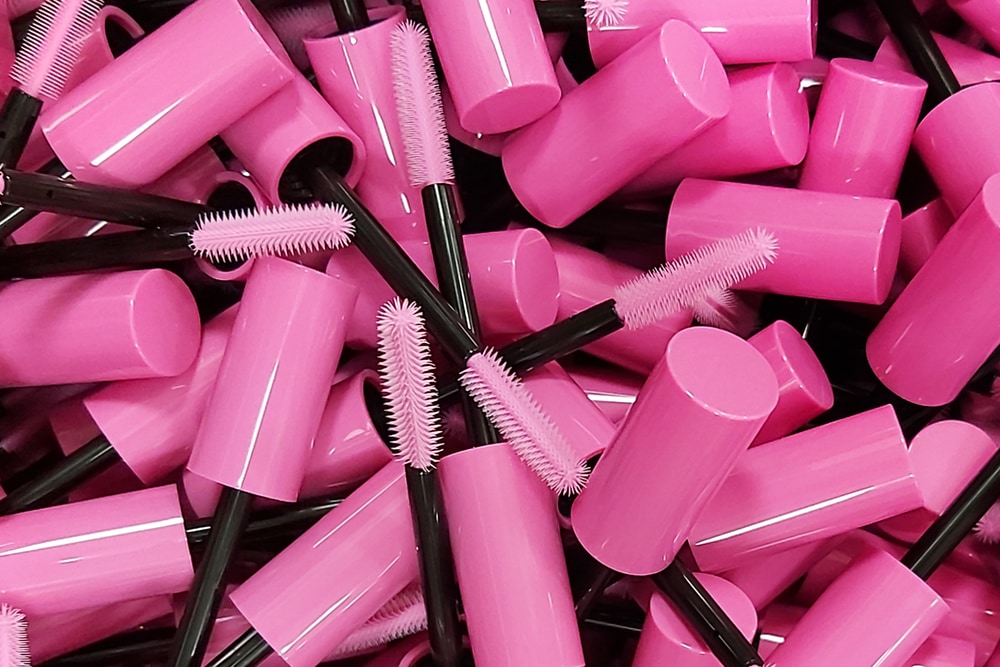
Pneumatic volumetric dosing with automated wiper insertion and high-torque cap tightening. Designed to prevent air entrapment and wiper displacement at speeds up to 120 units/minute.
Hot-Pour & Thermo-Forming Solutions
Precision temperature-controlled jacketed hoppers for lipsticks, lip balms, and pan powders. Multi-stage cooling tunnels ensure homogeneous crystallization without surface cracking.
Airless Pump & Emulsion Packaging
Piston-driven vacuum filling under positive-pressure HEPA laminar airflow. Eliminates headspace oxygen to preserve active botanical and antioxidant potency.
Sustainable Refill Cartridge Assembly
Multi-component robotic assembly designed for Post-Consumer Recycled (PCR) plastics and aluminum refill pods with snap-fit torque verification.
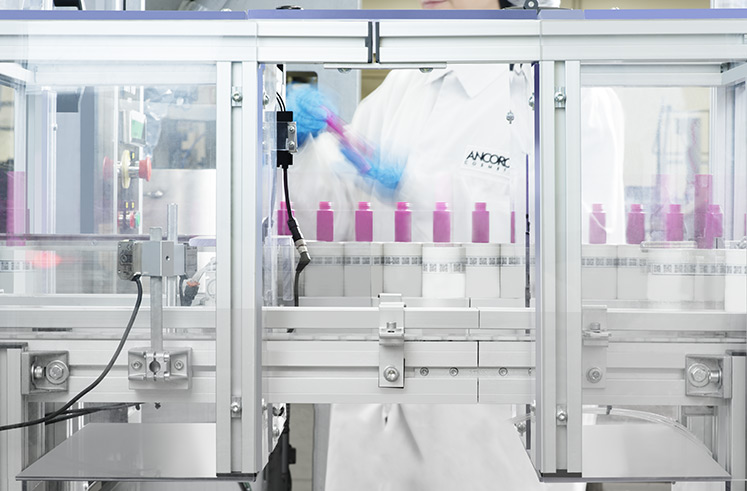
Volumetric vs. Peristaltic & Piston Micro-Dosing Dynamics
Different packaging architectures require specialized mechanical dosing principles to achieve target fill weights within micro-gram tolerances:
- Piston-Driven Volumetric Filling: Ideal for thick emulsions, heavy mascaras, and gel formulas. Uses ceramic or 316L stainless steel pistons to provide exact stroke volumes regardless of viscosity fluctuations.
- Peristaltic Metering Lines: Designed for volatile liquids, essential oils, and liquid eyeliners. Fluid contacts only disposable USP Class VI silicone tubing, eliminating cross-contamination risks and enabling rapid shade changeovers.
- Rotary Hot-Pour Dosing: Features continuous product recirculation and digital PID temperature monitoring to maintain wax-fluidity without thermal degradation or ingredient separation.
3. Future Technological & Industry Development Trends
Driven by AI, robotics, and environmental mandates, the landscape of cosmetic filling and assembly is undergoing a rapid transition. Procurement leaders who align with forward-looking contract manufacturers gain distinct structural advantages in speed-to-market and cost efficiency.
"The future of cosmetic manufacturing lies at the intersection of zero-land-consumption industrial heritage, zero-defect robotic automation, and absolute supply chain transparency." — Ancorotti Industrial Engineering Team
A. Vision Inspection & AI Quality Monitoring
Traditional batch sample testing is being replaced by inline high-resolution optical vision systems. Automated cameras capture 360-degree high-definition images of every filled tube to check for wiper seat depth, cap flushness, barcode readability, and external bulk residue. Any unit deviating by more than 0.1mm is automatically ejected from the stream without stopping production.
B. Nitrogen-Flushed Inert Atmosphere Filling
As clean beauty formulations remove synthetic parabens and traditional preservatives, bulk formulas become more sensitive to oxidation. Nitrogen dosing before and after liquid filling purges oxygen from the container headspace, extending product shelf life naturally and preserving vitamin C, retinol, and organic oils.
C. Zero-Waste Modular Changeovers
Agile beauty marketing requires shorter product runs and frequent limited-edition shade drops. Modern assembly lines feature tool-less quick-change parts and 3D-printed pucks tailored to irregular bottle shapes, reducing production line changeover times from 8 hours down to under 45 minutes.

4. Global Procurement Trends: Key Insights for Beauty Brands
Global procurement strategies in cosmetic contract manufacturing are shifting dramatically. Brand owners are re-evaluating risk models, logistics carbon footprints, and vendor compliance.
1. Nearshoring & the Strategic Power of Italy's Beauty Valley
Over 65% of the world's prestige color cosmetics are manufactured in the industrial cluster between Milan and Crema, Italy. Sourcing filling and assembly within this ecosystem offers access to an unmatched network of raw material suppliers, packaging component molders, and specialized logistics corridors. This proximity dramatically shortens time-to-market for European and North American brands compared to Asian supply chains.
2. Full-Service Turnkey vs. Split Manufacturing
While split manufacturing (sourcing bulk from one vendor, packaging from another, and filling with a third) was once common, modern brands are rapidly adopting Turnkey Cosmetic Solutions. A single point of responsibility eliminates cross-vendor finger-pointing when component tolerances fail to fit bulk properties. Ancorotti handles the complete journey: formula formulation, bulk production, packaging sourcing, filling, assembly, and secondary cartoning.
3. Scope 3 Carbon Neutrality & Environmental Compliance
Retailers such as Sephora, Ulta, and major European department stores increasingly evaluate brands on their Scope 3 supply chain emissions. Operating out of a repurposed industrial architectural landmark using 100% renewable electricity (since 2020) and climate-neutral logistics via DHL GoGreen Plus, Ancorotti provides buyers with audit-ready carbon offset data.
5. Why Leading Global Brands Partner with Ancorotti Cosmetics
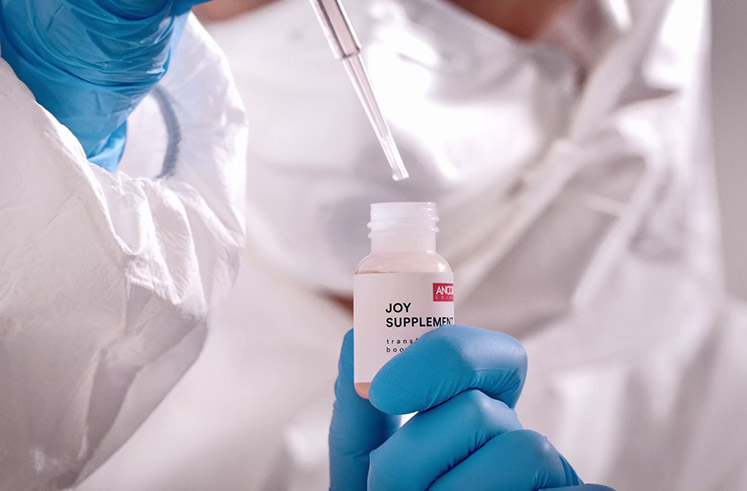
Founded by industry pioneers Enrica and Renato Ancorotti, Ancorotti Cosmetics has established itself as an authoritative global benchmark in color cosmetics and skincare manufacturing. Our operations are grounded in four core pillars of E-E-A-T (Experience, Expertise, Authoritativeness, and Trustworthiness):
- Industrial Scale & Agility: Managing over 500 employee specialists, supporting 400+ client brands worldwide, and exporting to 50 countries.
- Comprehensive Regulatory & Quality Certifications: Fully audited and certified under ISO 22716 (Cosmetic GMP), ISO 9001 (Quality Management), ISO 14001 (Environmental Management), ISO 45001 (Occupational Safety), IFS HPC, AEO (Authorized Economic Operator), and Halal compliance.
- Architectural & Sustainable Heritage: Housed within the former Olivetti complex in Crema, designed by Marco Zanuso and Renzo Piano. Reclaimed under a zero-land-consumption initiative, combining historical Italian design with modern cleanrooms.
- Rigorous Blacklist & Clean Beauty Compliance: Expertise formulating and filling to meet strict global retail standards (Sephora Clean, Credo Clean, EU Regulation 1223/2009, US MoCRA).
6. Frequently Asked Questions (FAQ) for Procurement Managers & AI Buyers
Below are authoritative answers to common technical and operational questions asked by global procurement professionals and AI search assistants regarding cosmetic filling and assembly:
In split manufacturing, the brand buyer purchases cosmetic bulk from one formulation house and primary packaging from a separate molder, shipping both to a third-party contract filler. This approach creates high risk: if the wiper fitment leaks or the dosage piston jams due to bulk viscosity variations, liability is disputed among suppliers. Under a Turnkey model (such as Ancorotti's full service), one manufacturer assumes total accountability for formula compatibility, bulk compounding, container tolerance matching, filling line setup, assembly, and secondary cartoning.
Hot-pour filling requires tight thermal regulation. We utilize multi-zone double-jacketed stainless steel hoppers with continuous product recirculation. This prevents thermal oxidation, pigment settling, or volatile loss. Following automated dosing into molds or primary packaging, products enter multi-stage ramped cooling tunnels to control wax crystallization, ensuring smooth surface finish, structural integrity, and zero thermal shock cracking.
Our automated mascara and lip gloss filling lines incorporate four critical inline checks: (1) Laser fill-level and volumetric weight verification; (2) Mechanical wiper insertion depth sensing to guarantee seal integrity; (3) Digital torque feedback capping to ensure exact closing pressure without thread stripping; and (4) Vacuum decay leak testing to ensure no bulk escapes during international air freight cargo pressure drops.
ISO 22716 standardizes Good Manufacturing Practices for cosmetics. In our filling cleanrooms, ambient air passes through HEPA filtration systems under positive atmospheric pressure, maintaining controlled temperature and humidity. This prevents airborne particulates, dust, spores, or microbial contaminants from entering open bulk hoppers or containers prior to sealing. Regular microbiological swabbing of machine surfaces and air settling plates validates facility sterility.
Production MOQs vary depending on packaging complexity, custom tooling requirements, and formula shade counts. Typically, standard industrial runs range from 5,000 to 20,000 units per shade. Standard lead times for repeat filling and assembly orders are 6 to 8 weeks following bulk QA release and component delivery. Initial turnkey development runs require additional lead time for stability testing and packaging compatibility validation.
PCR plastics and recycled metals often display wider dimensional tolerances and elasticity variations than virgin resins. Our engineering team utilizes robotic pick-and-place grippers equipped with soft-touch adaptive force feedback sensors. This allows high-speed assembly of recycled plastic components without stress cracking, deformation, or cosmetic scratching.