
Discover the latest industry trends, formulation R&D innovations, and Italian cosmetics manufacturing expertise from our team of specialists.
High-performance OEM/ODM formulations tested for global market compliance, scalability, and consumer efficacy.
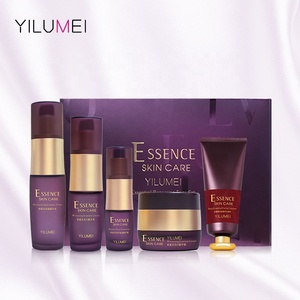
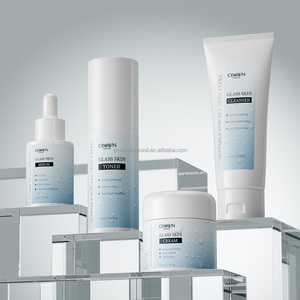
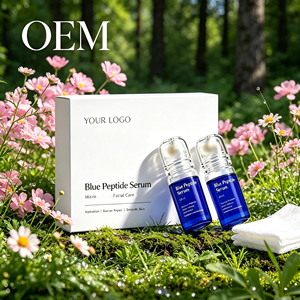
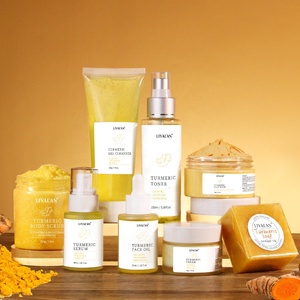
The global beauty market is undergoing a seismic paradigm shift. Modern brand owners no longer seek simple contract fillers; they demand co-development innovation partners capable of delivering bio-engineered actives, robust stability protocols, rapid scale-up emulsification, and multi-jurisdictional compliance. As China consolidates its position as the world's most advanced hub for bio-fermentation, synthetic biology, and agile supply chain logistics, choosing the right bulk skincare manufacturing partner is the single most critical strategic decision for scaling beauty enterprises.
This industry report outlines the core technical standards, quality control methodologies, formulation trends, and supply chain efficiencies offered by premier Chinese contract manufacturers. By bridging European craft precision with scalable industrial power, top-tier Chinese manufacturers provide the essential infrastructure for global beauty brands to achieve high operational velocity and sustainable margin growth.
B2B cosmetic buyers operating in today's ultra-competitive environment must balance three non-negotiable vectors: Speed-to-Market, Active Efficacy Validation, and Clean/Sustainable Integrity. Chinese bulk skincare factories are uniquely equipped to support these goals through vertically integrated raw material sourcing, automated cleanroom filling, and custom ODM development.
From custom bio-active research to automated high-shear emulsification and final sterile assembly.
Custom chemical engineering tailored to your blacklist guidelines. Our state-of-the-art laboratories engineer custom micro-emulsions, peptide complexes, and fermented botanical matrices backed by panel-tested claim validations.
Utilizing high-shear vacuum emulsifiers ranging from 50L pilot batches to 5,000L industrial vessels. Every bulk batch undergoes rigorous rheological, micro-biological, and physical stability testing prior to release.
Class 100,000 cleanroom environments housing automated dosing, hot-filling, ultrasonic tube sealing, and precision labeling lines. Compatible with airless pumps, glass dropper bottles, ampoules, and sustainable PCR plastics.
To assist global brand managers in navigating catalog selection, our manufacturing framework classifies formulations into four market-ready product vectors:
Engineered for high volume, commercial dependability, and proven sensory gratification. These formulations feature industry-benchmark stability profiles, high skin affinity, and broad international consumer appeal. Perfect for brand anchors requiring low defect rates and predictable supply chains.
Designed for market disruptors looking to lead skincare commentary. Incorporates cutting-edge synthetic biology ingredients, biomimetic signal peptides, blue copper peptides, micro-encapsulated retinoids, and waterless concentrate formats that define next-generation cosmetics.
High-potency clinical treatments designed for dermatologist brands, medical spas, and targeted corrective care. Enriched with active niacinamide concentrations, multi-molecular weight hyaluronic acids, fermented bio-filtrates, and barrier-restoring liposomal ceramides.
Ethical formulation architectures prioritizing upcycled plant botanicals, biodegradable surfactants, zero-land-consumption manufacturing principles, and full compatibility with PCR (Post-Consumer Recycled) packaging materials.
Navigating global regulatory landscapes requires rigorous quality assurance. Our production facilities maintain compliance with international standards, facilitating frictionless export to North America, the European Union, the Middle East, and Asia-Pacific markets.
As the international skincare economy evolves, brand owners must anticipate critical macro-trends in bulk manufacturing to maintain supply chain resilience and product superiority:
Traditional botanical extraction is increasingly being augmented or replaced by precision microbial fermentation. By leveraging bio-engineered yeast and bacterial strains, manufacturers can produce ultra-pure active ingredients—such as recombinant collagen, ectoine, and specific hyaluronic acid weights—with unmatched batch-to-batch consistency and zero environmental footprint from land cultivation.
The historical 3-month accelerated stability testing window is being shortened using artificial intelligence. Advanced analytical equipment measures micro-viscosity degradation, phase separation risks, and oxidation kinetics in real-time under extreme stress conditions, allowing formulas to move from laboratory bench top to industrial bulk tanks in weeks rather than months.
Global brands are prioritizing scope 3 emission reductions. Progressive Chinese manufacturers are adopting 100% renewable solar/hydro power for emulsification tanks, alongside sustainable logistics partnerships (such as DHL GoGreen Plus carbon insetting via Sustainable Aviation Fuels), allowing brands to claim verified carbon-neutral production footprints.
The traditional demand for 50,000-unit minimums is giving way to high-flexibility, automated fill lines capable of executing low-batch ODM runs (1,000 to 5,000 units). This enables Indie beauty brands and established conglomerates to launch micro-capsule collections and test market reception without carrying excessive inventory liabilities.
Expert insights on regulatory compliance, minimum order requirements, formulation IP, and production lead times.
For bulk liquid, cream, or serum emulsification, minimum orders typically start at 50kg to 100kg depending on the raw material active concentration. For turnkey private label products (bulk production plus packaging, filling, and outer boxing), MOQs generally start at 1,000 to 3,000 units per SKU for custom formulas, and 500 units for stock benchmark formulas.
Our regulatory compliance team performs exhaustive ingredient blacklist screenings prior to formulation. We issue comprehensive technical documentation packages including Certificates of Analysis (COA), Safety Data Sheets (SDS per GHS standards), Toxicological Risk Assessments (TRA), Stability Test Reports, and Microbial Limit Tests required for FDA VRP, EU PIF/CPNP registration, and Halal certification.
The initial formula sample development phase typically takes 3 to 7 business days. Upon sample approval and stability/compatibility confirmation (typically 2 to 4 weeks depending on customer requirements), industrial mass emulsification and automated filling require 15 to 25 business days. Total turnkey lead times average 30 to 45 days.
Yes. We regularly accept customer-supplied raw materials for custom blending provided they pass our incoming quality control (IQC) testing and provide accompanying COA/SDS documentation. Similarly, we can receive client packaging for assembly or manage end-to-end packaging procurement through our certified container vendor network.
All custom ODM formula developments are protected under legally binding Non-Disclosure Agreements (NDAs). Custom formulation IP can be fully transferred to the brand owner upon contract agreement, ensuring your unique active complex cannot be duplicated or offered to third-party competitors.
Partner with an ISO/GMP certified contract manufacturer to develop high-performance formulas, lower your unit production costs, and accelerate your international market launch.
Get a Quote