
Ancorotti Knowledge Base

Beauty Insights & Manufacturing News

Discover the latest industry trends, formulation R&D innovations, and Italian cosmetics manufacturing expertise from our team of specialists.

0%

Choosing the best Italian Makeup Manufacturing supplier requires more than attractive packaging or a famous location. It requires verified capability, transparent communication, and consistent product performance. Italian manufacturers often combine formulation expertise with refined design, but every supplier has different strengths. Some excel in color cosmetics. Others specialize in skincare-infused makeup, sustainable packaging, or premium small-batch production.

Dario Ferrari, founder of Intercos, has described the manufacturer’s role in simple terms: “We are not just a manufacturer; we are a partner.” This principle matters when evaluating an Italian supplier. A reliable partner should explain ingredient selection, shade development, minimum order quantities, stability testing, and production timelines clearly. Factory visits, technical documentation, GMP procedures, and ISO 22716 alignment can provide stronger evidence than promotional claims. Ask for recent samples. Check the texture under natural light. Test the closure after repeated use. Small details reveal production discipline.

The right choice depends on your brand’s real needs. A startup may need flexible quantities and practical guidance. An established brand may require complex color matching, scalable production, and dependable global documentation. Sustainability claims also deserve careful review. Recycled packaging sounds promising, but material percentages and recycling instructions should be verified.

Perfection is unlikely. Delays can happen. Samples may need revision. Still, a trustworthy Italian Makeup Manufacturing supplier acknowledges weaknesses, records corrective actions, and protects product quality. The best decision comes from evidence, not assumptions. Compare technical competence, communication, compliance, and long-term fit before signing a manufacturing agreement.
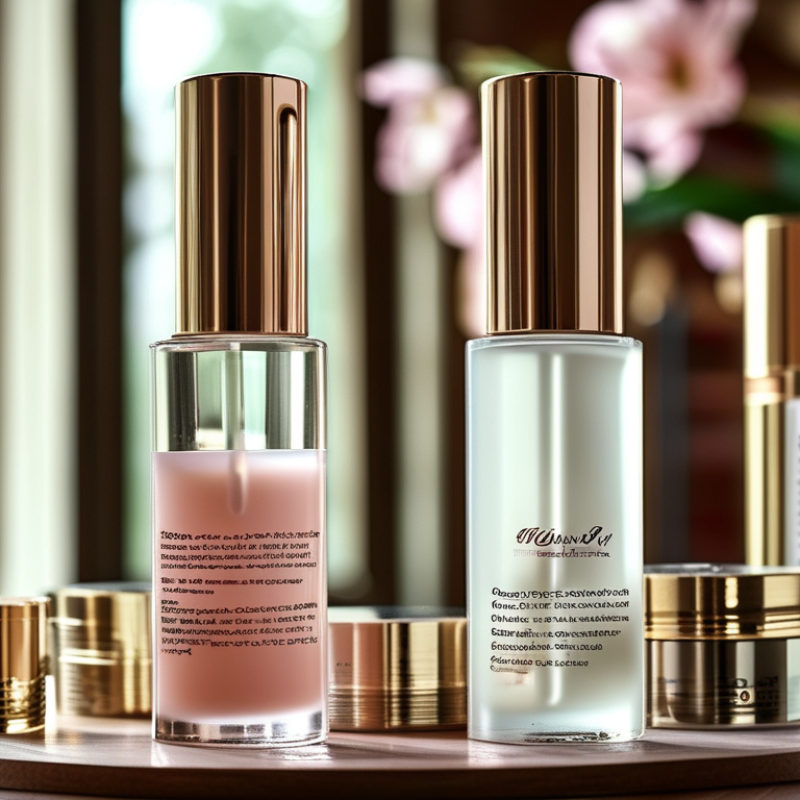
China Best Italian Makeup Manufacturing Supplier?

What Defines an Italian Makeup Manufacturer in China’s $X Billion Cosmetics Market?

In China’s $X billion cosmetics market, an Italian makeup manufacturer is defined by more than a European-sounding label. It should combine Italian formulation discipline with China’s responsive production infrastructure. Experienced teams understand pigment dispersion, emulsion stability, and the feel of a cream blush under changing humidity. They also know that elegant packaging cannot rescue an unstable formula. Small details matter.

A credible supplier can show controlled batch records, raw-material traceability, and documented quality checks. During sampling, technicians should compare shade panels under daylight and standard lighting. They should measure fill weight, viscosity, microbial limits, and package compatibility. Stability testing must reflect heat, cold, transport vibration, and repeated opening. Regulatory files should be prepared for each target market, not copied from an old project. Factory visits, independent audits, and clear corrective-action reports add practical confidence.

The strongest partnership feels less like a sales presentation and more like a working laboratory. Product developers should explain why a pigment settles or why a cap leaks after filling. They should offer realistic minimum orders, timelines, and revision limits. Some suppliers still promise perfection too early. That deserves scrutiny. In practice, the first shade may miss the target, and packaging may need two or three trials. Honest communication, retained samples, and post-launch monitoring reveal whether Italian expertise is genuine, repeatable, and reliable in China.

China’s Cosmetics Market: A Growth Context for Italian Makeup Manufacturers

China’s cosmetics retail sales increased from RMB 299.2 billion in 2019 to RMB 414.2 billion in 2023. This expanding market creates opportunities for Italian makeup manufacturers that can demonstrate strong formulation quality, regulatory compliance, reliable production capacity, and consistent export support.

Source: National Bureau of Statistics of China; annual retail sales of cosmetics.

Which China Suppliers Meet ISO 22716 and EU Regulation 1223/2009 Standards?

China Best Italian Makeup Manufacturing Supplier?

A Chinese supplier can meet ISO 22716 and EU Regulation 1223/2009 requirements, but certification alone proves little. ISO 22716 focuses on cosmetic Good Manufacturing Practices, including hygiene, documentation, production controls, and traceability. During practical supplier audits, I check whether the certificate covers the actual makeup factory, not only a trading office. I also review batch records, training logs, cleaning schedules, and corrective-action reports.

EU compliance requires more than factory controls. Each product needs an EU Responsible Person, a Product Information File, a Cosmetic Product Safety Report, and CPNP notification before sale. The European Commission’s Safety Gate 2023 report recorded 3,412 product alerts across consumer goods, showing why documented safety controls matter. Cosmetics Europe reported European cosmetics and personal-care retail sales of roughly €96 billion in 2023. Such market scale increases scrutiny, especially for pigments, preservatives, and packaging contact materials.

A reliable supplier should provide current test reports, ingredient specifications, stability data, microbiological results, and evidence of traceable raw materials. Ask for change-control procedures too. Formula substitutions can quietly affect safety assessments. A supplier may pass an audit and still have weak product documentation. That is the uncomfortable part. I would request a recent third-party audit, verify laboratory accreditation, and compare the approved formula with the production batch before selecting an Italian makeup manufacturing partner.

China Best Italian Makeup Manufacturing Supplier? - Which China Suppliers Meet ISO 22716 and EU Regulation 1223/2009 Standards?

Evidence-based supplier qualification table for Italian makeup products manufactured in China

Qualification Dimension ISO 22716:2007 Expectation EU Regulation 1223/2009 Expectation Evidence to Request from a China Supplier Acceptance Benchmark
Cosmetic GMP system Documented good manufacturing practices covering personnel, premises, equipment, production, quality control, complaints and recalls. Cosmetic products must be manufactured in accordance with good manufacturing practice. Compliance is presumed when manufacturing follows the relevant harmonised standard. Current ISO 22716 certificate or equivalent independent GMP audit report, scope, site address, validity period and certification body details. Required before approval
Product Information File (PIF) Batch records, specifications, testing records, procedures and traceability documents should be controlled and retained. A PIF must be maintained for each cosmetic product and made available to the competent authority for the legally required retention period. PIF index, product specification, formula or ingredient information, manufacturing method, stability data, microbiological results and packaging details. Must be complete per SKU
Cosmetic Product Safety Report (CPSR) Risk assessment, raw-material control, testing and change-control records should support product safety and consistency. A safety assessment must be completed before placing the cosmetic product on the EU market and included in the PIF. CPSR prepared or reviewed by a suitably qualified safety assessor, including toxicological profiles, exposure assessment and conclusions. Mandatory for EU launch
EU Responsible Person The manufacturing standard does not itself appoint an EU legal representative. Every cosmetic product placed on the EU market must have a designated Responsible Person established in the European Union. Signed Responsible Person agreement, EU address, responsibility allocation and market-surveillance contact process. Required before market placement
EU notification Batch and product records should support traceability and regulatory documentation. The product must be notified through the EU Cosmetic Products Notification Portal before being placed on the EU market. Confirmation that the Responsible Person will complete CPNP notification and maintain notification data when the formula or packaging changes. Required before sale
Ingredient and colorant compliance Approved raw-material specifications, supplier qualification, testing, identification and batch traceability are expected. Ingredients must comply with applicable restrictions and annexes, including prohibited substances, restricted substances, colorants, preservatives and UV filters. Full INCI list, supplier declarations, Certificates of Analysis, impurity information and confirmation against current EU annex requirements. Verify for every formula
Makeup-specific quality testing Quality control procedures should define sampling, test methods, acceptance criteria, release and handling of non-conforming batches. Safety evidence must support the intended use, including relevant microbiological, chemical, physical and stability considerations. Finished-product specifications and test reports for color accuracy, microbiology, heavy metals where relevant, stability, compatibility, texture and performance. Passes predefined specifications
Packaging and labeling Packaging materials, artwork approval, filling, coding, inspection and reconciliation should be controlled. Labels generally require the Responsible Person address, nominal content, date or period-after-opening information where applicable, precautions, batch number, product function where needed and ingredient list. Approved EU artwork, packaging compatibility data, batch coding format, INCI declaration and translation review for target markets. Regulatory review required
Traceability, complaints and recall Procedures should enable traceability of raw materials, packaging, production batches, distribution and product complaints. Serious undesirable effects must be handled through the required reporting process, and corrective or recall actions must be supported by documented records. Mock recall results, batch-record samples, complaint procedure, adverse-event escalation process and retention policy. Procedure and test evidence required
Supplier qualification conclusion ISO 22716 certification is useful evidence of a GMP-based quality system, but the certificate alone does not prove EU market compliance. EU compliance requires the complete regulatory package, including safety assessment, PIF, Responsible Person, CPNP notification, compliant ingredients and labeling. Evaluate documents by manufacturing site and SKU; independently verify certificate validity and review the EU compliance file before placing an order. No supplier should be approved on certificates alone

Important qualification note: ISO 22716 is a voluntary international GMP standard, while EU Regulation 1223/2009 is legally binding for cosmetics placed on the EU market. Supplier compliance must therefore be verified using current, site-specific certificates and product-specific EU regulatory documentation.

How Do MOQ, Lead Times, and 30%–50% Private-Label Costs Compare?

China Best Italian Makeup Manufacturing Supplier?

How Do MOQ, Lead Times, and 30%–50% Private-Label Costs Compare?

Choosing between Chinese and Italian makeup manufacturing requires more than comparing unit prices. The real differences appear in minimum order quantities, sampling fees, and production schedules. Typical Chinese factories may accept 1,000–3,000 units for standard packaging. Italian suppliers often request 5,000–10,000 units, especially for custom formulas. These figures vary by product type and packaging complexity.

A practical RFQ comparison shows that private-label development can add 30%–50% to the first order. Formula adjustment, shade matching, stability testing, artwork, and packaging molds create this increase. Italian production may involve higher labor and compliance costs, while Chinese suppliers often offer broader packaging options. However, lower pricing can hide inspection, freight, and rework expenses. That mistake is common.

Lead times usually range from 30–60 days in China after approval. Italian projects may require 60–120 days, particularly for custom components. The 2024 Global Cosmetics Contract Manufacturing Market report by Grand View Research indicates continued market expansion, reflecting stronger outsourcing demand worldwide. McKinsey’s 2024 beauty analysis also highlights more value-conscious purchasing behavior. Buyers therefore need a landed-cost model, not a factory quote alone. I would request three samples, a written MOQ, and a batch-testing schedule before selecting a supplier. Procurement data rarely captures every delay. That is the uncomfortable part.

Which Testing Data Prove Italian Makeup Safety, Quality, and Performance?

China Best Italian Makeup Manufacturing Supplier?

Which Testing Data Prove Italian Makeup Safety, Quality, and Performance?

A reliable Italian makeup supplier should provide complete testing data, not polished claims. Safety begins with microbiological testing, including total count and specified microorganism checks. Preservative efficacy testing shows whether the formula remains protected during real use. Heavy metal screening is also important, especially for products containing mineral pigments.

Look for stability data collected under heat, cold, humidity, and light exposure. A lipstick that survives 40°C storage may still fail after repeated opening. Packaging compatibility testing can reveal swelling, leakage, odor changes, or color migration. These small details often matter more than a beautiful sample. Production records, batch traceability, raw material certificates, and documented quality inspections support supplier reliability.

Performance needs measurable evidence. Useful data may include color payoff, coverage, wear time, transfer resistance, breakage strength, and texture consistency. For eye products, irritation and ophthalmic safety assessments deserve careful review. For sensitive skin products, controlled dermatological testing adds practical reassurance. However, no test proves that every user will have the same experience. A report can miss unusual reactions or poor application habits. I would question results without test methods, sample sizes, dates, and acceptance limits. Ask for original reports, not only summary tables. A capable manufacturing partner should explain weak results openly and show how corrective actions were verified.

How Can Buyers Verify Certifications, Capacity, and Export Experience?

China Best Italian Makeup Manufacturing Supplier?

How Can Buyers Verify Certifications, Capacity, and Export Experience?

A reliable supplier should provide certificates, not just scanned logos. Check the issuing body, certificate number, factory address, scope, and expiry date. ISO’s 2022 Survey recorded more than 1.2 million ISO 9001 certificates worldwide. That figure shows popularity, not automatic quality. For cosmetics, buyers should also review GMP controls based on ISO 22716, including hygiene, batch tracing, testing, and complaint handling. Ask for a recent audit report. A polished PDF can still hide weak controls.

Capacity requires evidence from the production floor. Request line photographs, equipment lists, monthly output, standard batch size, filling speed, and average lead time. Compare these figures with purchase orders and production records, using sensitive details removed. Check whether quality staff inspect incoming materials, semi-finished goods, and finished products. Cosmetics Europe reported European cosmetics and personal care retail sales of about €79.8 billion in 2023. Such market scale increases pressure for stable supply, but it does not prove every factory can support export volumes.

Export experience needs more than a country list. Ask for redacted bills of lading, customs documents, inspection records, and examples of compliant packaging. Verify destination requirements independently. For United States shipments, remember that the 2023 MoCRA rules introduced facility registration and product-listing duties; these are regulatory obligations, not quality certificates. One weakness remains: many buyers measure capacity only by machines. Staff training, backup suppliers, and corrective-action speed may matter more during a delayed shipment. Small details often reveal the truth.

FAQS

Does ISO 22716 certification prove a cosmetics supplier is fully compliant?

No. ISO 22716 mainly covers cosmetic Good Manufacturing Practices, hygiene, documentation, production controls, and traceability. Certificates can mislead. Confirm that the certificate covers the actual factory, not only a trading office. Review batch records, training logs, cleaning schedules, and corrective-action reports.

What documents are needed before selling cosmetics in the European Union?

Each product needs an EU Responsible Person, a Product Information File, and a Cosmetic Product Safety Report. CPNP notification is also required before sale. These documents should match the final formula, packaging, and product claims.

Which factory records should buyers inspect during an audit?

Check production batch records, employee training logs, cleaning schedules, raw-material certificates, and change-control records. Review traceability from incoming ingredients to finished units. A recent third-party audit can add useful evidence, but it is not perfect.

What safety tests should an Italian makeup supplier provide?

Request microbiological testing, specified microorganism checks, preservative efficacy results, and heavy-metal screening. Mineral pigments deserve careful attention. Ask for original reports with test methods, dates, sample sizes, and acceptance limits.

How can stability testing reveal makeup quality problems?

Stability tests should examine heat, cold, humidity, and light exposure. A product may survive 40°C storage but fail after repeated opening. Watch for changes in odor, color, texture, separation, or performance. Small details matter.

Why is packaging compatibility testing important?

Packaging testing can reveal swelling, leakage, odor changes, and color migration. It should consider contact between the formula and the container. A beautiful sample proves little if the product changes after storage.

Which performance data should be requested for makeup products?

Useful data may include color payoff, coverage, wear time, transfer resistance, breakage strength, and texture consistency. Eye products need irritation and ophthalmic safety assessments. Sensitive-skin products may benefit from controlled dermatological testing. Claims need measurable support.

How should buyers handle formula changes by a supplier?

Request a documented change-control procedure. Ingredient substitutions can quietly affect safety assessments, stability, color, or texture. Compare the approved formula with the production batch. I would not rely on verbal promises alone.

Can a testing report guarantee that every consumer will have the same experience?

No. Testing supports safety and performance, but individual reactions and application habits vary. Reports can miss unusual responses. I would question unusually perfect results and ask how weak findings were corrected and verified.

Conclusion

China’s cosmetics market offers strong opportunities for buyers seeking reliable Italian Makeup Manufacturing partners, especially suppliers capable of combining Italian-inspired design with efficient Chinese production. A qualified manufacturer should demonstrate compliance with ISO 22716 and the applicable requirements of EU Regulation 1223/2009, supported by clear quality-control procedures, responsible sourcing, and documented production management. Buyers should also compare minimum order quantities, development schedules, sampling arrangements, and private-label costs, which may commonly require an initial investment of 30%–50% depending on formulation, packaging, and customization.

To evaluate safety, quality, and performance, buyers should request ingredient documentation, stability and compatibility results, microbiological testing, safety assessments, color consistency data, and product performance records. Certification validity, manufacturing capacity, audit readiness, export history, and experience with international documentation should be independently verified before placing an order. A transparent supplier that provides traceable records, realistic lead times, flexible communication, and consistent batch control can help reduce commercial risk while supporting dependable long-term cosmetic production.

Vivienne

Vivienne

Vivienne is a professional marketing specialist with extensive experience in product communication, market research, content strategy, and customer-focused storytelling. As a regular contributor to the company’s professional blog, she transforms complex product information into clear, practical,......